Planners · Money
Budget Planner
Calm money planning, no clutter.
- Emailed to you personally, within one working day of payment
- Print at home, or annotate on a tablet with any PDF app
- Designed in South Africa, priced in Rand
- Undated, so you can start on any day of any month
Buy Budget Planner
From R90 / US$5
Final price depends on the page count and format you choose.
- Digital files — nothing ships
- Charged in South African Rand
- Refunds policy
About this planner
Most budgeting tools fail for the same reason: they assume you want to account for every rand. This one assumes you want to stop dreading the middle of the month. It gives you one spread for income, one for fixed costs, one for the flexible spending that actually decides whether a month works, and a savings page that treats putting money away as a line item rather than an afterthought.
It was drawn for South African money, so it has room for stokvel or family contributions, prepaid electricity, medical aid and a debt column that does not pretend to be a mortgage tracker. Nothing calculates for you. That is deliberate — the arithmetic is the part where you notice things.
How people use it
Fill the fixed costs once — they rarely change — and reprint only the flexible page each month. Most people sit with it for twenty minutes at month-end with last month's bank statement open, then leave it somewhere visible. On a tablet it works well in GoodNotes with the pages duplicated per month.
What's inside
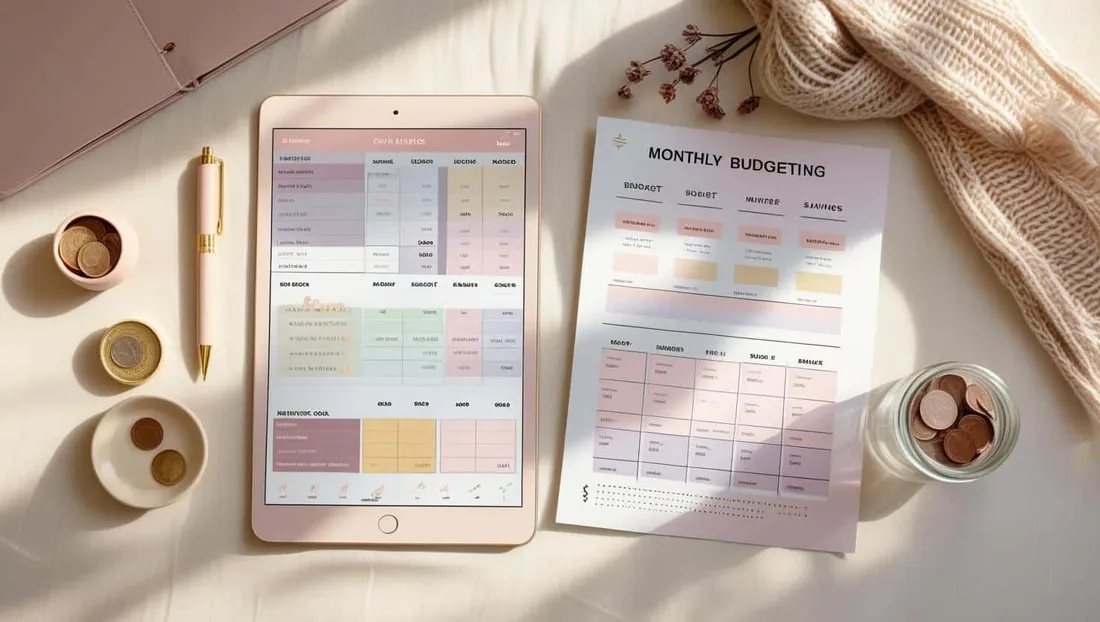
- Monthly overview: income, fixed costs, flexible spending, savings
- Fixed expenses page with space for annual and irregular bills
- Debt tracker with balance, minimum and actual paid
- Savings goals page with target and running total
- Notes page for the month's decisions, so next month starts informed
This is for you if
- You know roughly what comes in but not where it goes
- You have tried budgeting apps and abandoned them by week two
- You share money with someone and need one page you can both read
- You are rebuilding after a hard year and want a calm place to start
Format
- PDF, printable A4 plus a hyperlinked version for note-taking apps
- Undated — start in any month
- Print single pages as often as you like
A digital budget planner should make money feel clearer, not heavier. AC Doughworks offers intentional planning tools that help you track income, spending and monthly priorities in a way that supports steady financial progress.
Who This Planner Is For
- Women creating a more mindful monthly budget
- Households trying to reduce financial stress
- Anyone who wants a simple printable or digital budget system
What To Expect
Our budget planning tools are designed for easy use, instant access and practical everyday planning. They pair well with our meal planner, day planner and weekly planner for a complete life-admin setup.
Start with the AC Doughworks Budget Planner if you want a digital tool that supports clarity, intention and everyday peace of mind. For family-focused budgeting, also see our household budget planner guide.
Built for South African money
Most budget templates assume a single salary, a mortgage and predictable monthly bills. A South African household budget has to cope with a prepaid meter that swallows a few hundred rand without warning, school fees on a term cycle, groceries that move with the exchange rate, and — for a great many households — money that goes to family who need it, invoiced or not.
The planner is laid out for that: fixed costs separated from flexible spending, a column for irregular and annual bills so December is not a shock, and space for contributions that are not optional even when nobody sends a bill.
Nothing calculates for you
That is deliberate. The arithmetic is the part where you notice things. Typing figures into a spreadsheet that sums them for you produces a total; writing them down produces the small, uncomfortable realisation that is the entire point of budgeting.
Record first, target later
Spend the first month writing down what actually happened, without judgement. By the second month you will already see two or three things you did not know. Only by the third is a target worth setting, because now it is based on your household rather than an aspirational one.
Print the fixed-costs page once — it rarely changes. Reprint only the flexible page each month.
Debt and savings on the same page
The debt tracker records balance, minimum payment and what you actually paid, because the gap between the last two is where progress either happens or quietly does not. The savings pages treat putting money away as a line item rather than whatever is left over, which for most months is nothing.
Which version to buy
The full Budget Planner includes the debt tracker, savings goals, irregular bills and a notes page. The single-page budget sheet is income, fixed costs, flexible spending and savings on one sheet — the right size for a simple, predictable month, or for a first attempt.
Both print on plain A4 and include a hyperlinked tablet version.
A household budget planner should help you manage the real costs of everyday life with more clarity. AC Doughworks offers practical planning tools for groceries, recurring bills, family routines and monthly money goals.
Plan A Calmer Household Budget
Pair your Budget Planner with a Meal Planner and Weekly Planner to connect spending decisions to your real weekly routine.
What a household budget actually has to cope with
A household budget in South Africa is not one number. It is groceries that move with the exchange rate, a prepaid meter that swallows a few hundred rand without announcement, school fees on a term cycle rather than a monthly one, and — for most households — money that goes to family who need it. A template built for a single salary and a mortgage will not survive that.
The Budget Planner is laid out for it: fixed costs separated from the flexible spending that actually decides whether a month works, a column for irregular and annual bills so December is not a surprise, and space for contributions that are not optional even when they are not invoiced.
Start with three months, not a year
Most household budgets fail because they begin with a target instead of a record. Spend the first month writing down what actually happened, without judgement. The second month, you will already see two or three things you did not know. Only by the third month is a target worth setting, because now it is based on your household rather than an ideal one.
Print the fixed-costs page once — it rarely changes. Reprint only the flexible page each month.
Get everyone who spends money onto one page
If two people spend from the same account and only one keeps the budget, the budget is fiction. The planner is a single readable sheet on purpose: it is meant to be stuck somewhere both people pass, not filed. A weekly two-minute glance between partners prevents most of the arguments that a detailed monthly review is supposed to solve.
Where groceries and the week connect
Food is usually the largest controllable line in a South African household budget, and it is decided in the kitchen rather than the spreadsheet. Pairing the budget with a meal plan is the single change that moves the number, because a planned week means one shop instead of three, and three shop trips is where the overspend lives.
You might also like
Wedding
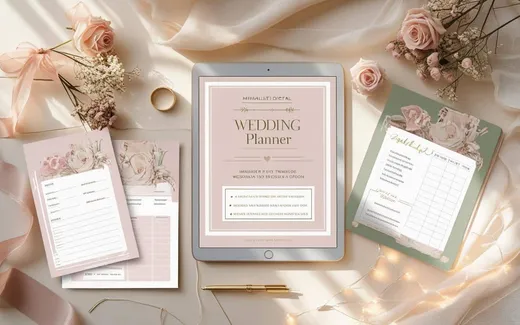
15-Page Beautifully Simple Digital Wedding Planner
Fifteen pages that hold the whole wedding without the overwhelm — guests, budget, timeline, suppliers.
From R200 / US$12
Journals
15-Page Digital Journal for Gentle Clarity & Emotional Reset
A short, kind reset. Fifteen pages for the weeks when everything feels like too much.
From R50 / US$3
Journals
50-Page Digital Journal
Fifty pages of room to think, structured just enough to keep you writing.
From R80 / US$5